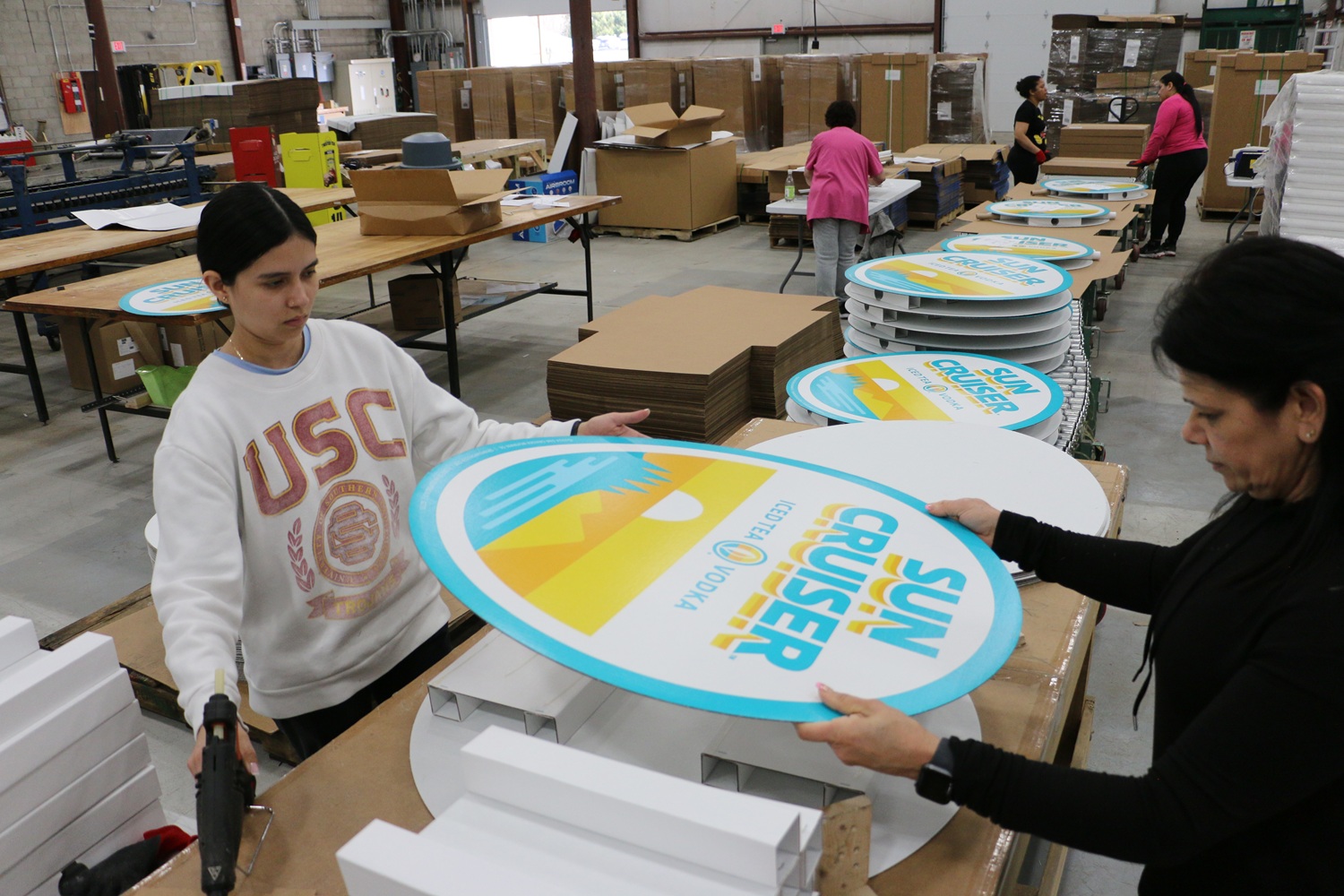

Managing multiple packaging vendors can become complicated when several suppliers contribute to the same program.
One partner may handle corrugated packaging. Another manages printing. Others produce displays, assemble kits, or coordinate fulfillment.
Each supplier may perform its role well. The challenge is keeping every production partner aligned around specifications, approvals, schedules, and deadlines.
As packaging programs grow, buyers can spend more time coordinating vendors than managing the program itself.
This is where turnkey packaging and fulfillment can become useful. Consolidating connected stages can reduce unnecessary handoffs while keeping more of the project under one coordinated workflow.
That does not mean every business needs one supplier. However, buyers should understand where vendor complexity can create operational problems.
When Managing Multiple Packaging Vendors Creates More Work
Every additional supplier introduces another relationship to manage.
That can mean another contact, production schedule, approval path, specification set, and project handoff.
For a simple packaging order, those added responsibilities may be manageable.
Complexity increases when several parts of the program depend on each other.
A retail launch could involve:
- Corrugated packaging
- Roll-off dumpster rentals
- Retail packaging
- Point-of-purchase displays
- Assembly and kitting
- Fulfillment and shipping
Once those elements become connected, internal teams often become the link between suppliers.
That can create more coordination than buyers originally expected.
Communication Gaps Can Affect Several Production Stages
Packaging programs depend on accurate, up-to-date information.
Key details may include:
- Dimensions
- Artwork
- Materials
- Quantities
- Retail requirements
- Shipping instructions
- Production deadlines
A change to package dimensions can affect corrugated materials, graphics, inserts, displays, assembly instructions, and shipping configurations.
Every affected supplier must receive the correct revision.
If one vendor works from an outdated specification, the problem may not appear until production is already underway.
The issue is not always poor communication. Sometimes there are simply too many separate communication paths.
A more connected packaging workflow can reduce handoffs and make project changes easier to manage.
Separate Production Schedules Can Create Bottlenecks
Packaging components often move through production on different timelines.
Problems begin when one stage depends on another being completed first.
For example:
- Displays may require final package dimensions.
- Assembly may depend on printed components arriving first.
- Fulfillment cannot begin until all required materials are ready.
A delay in one stage can therefore affect the entire schedule.
This becomes especially important during product launches, seasonal campaigns, retail resets, multi-SKU programs, and display rollouts.
As deadlines approach, buyers have less time to recover from missed handoffs.
Coordinated scheduling cannot remove every production challenge, but it can make dependencies easier to track and manage.
More Suppliers Can Complicate Approvals
Packaging projects often require several rounds of review.
Buyers may need to approve artwork, structural samples, materials, prototypes, print proofs, and final specifications.
When separate vendors control different components, those approvals may occur independently.
A change approved with one supplier could require adjustments from several others.

That can create longer email chains, additional proofing rounds, and version-control problems.
Centralized coordination helps teams understand which decisions affect later production stages.
It can also reduce the chance of one component moving forward before another is ready.
Multiple Vendors Can Make Quality Control Harder
Connected packaging elements need to work together throughout production.
For example:
- Retail packaging must fit correctly within displays.
- Printed graphics should remain visually consistent.
- Structural components must match approved dimensions.
- Assembly teams need materials prepared in the correct configuration.
When several suppliers work independently, small differences can create larger production issues.
A specification may be interpreted differently. A structural change may not reach the display manufacturer. A print adjustment may affect another component already in production.
These problems do not always mean one vendor performed poorly.
Often, the real issue is a lack of coordination between otherwise capable suppliers.
Accountability Can Become Unclear
When problems occur between production stages, identifying responsibility can take time.
Imagine finished packages no longer fit correctly inside a display.
- Was the display produced incorrectly?
- Did the package dimensions change?
- Was an outdated specification supplied?
- Did the wrong version reach production?
The buyer may need to contact several companies before finding the answer.
Meanwhile, the project schedule continues moving.
This often leaves procurement, marketing, or packaging teams acting as project integrators between vendors.
A more consolidated approach can create clearer responsibility across connected parts of the program.
Vendor Management Adds Administrative Work
The true workload of managing suppliers goes beyond production.
Each relationship can create additional administrative tasks, including:
- Quotes and purchase orders
- Vendor onboarding
- Invoice processing
- Proof approvals
- Production updates
- Schedule tracking
- Shipping coordination
- Issue resolution
One additional supplier may not create much extra work.
Multiply those tasks across several products, locations, or campaigns, and the burden grows.
That internal effort should be considered when evaluating how efficiently a packaging program is being managed.
Delays and Rework Can Create Unexpected Costs
Using several suppliers does not automatically make packaging more expensive.
Likewise, consolidating vendors does not guarantee lower costs.
The concern is what happens when coordination fails.
Unexpected expenses can result from reprinting, replacement components, expedited shipping, production changes, extra setup, or additional assembly.
An early packaging error can also affect several downstream stages.

A dimensional change might require revisions to displays, inserts, printing, or packing configurations.
Identifying those conflicts early is usually easier than correcting them after production advances.
Complexity Grows With the Packaging Program
The operational burden increases as packaging programs become larger.
A single corrugated package may require limited coordination.
A broader retail program could involve several SKUs, printed graphics, custom displays, assembly, kitting, and fulfillment.
Add different retail locations or configurations, and the number of dependencies grows again.
At that point, buyers are not simply ordering individual packaging components.
They are managing an interconnected production program.
That is when vendor structure becomes an operational decision, not just a purchasing decision.
When Can Turnkey Packaging Make Sense?
Vendor consolidation is not the right answer for every project.
Specialized suppliers may remain valuable when unique materials, equipment, processes, or production capabilities are required.
The better question is whether separating closely related stages still provides enough value to justify the added coordination.
Turnkey packaging may be worth considering when:
- Packaging and displays must work together
- Several SKUs share one retail program
- Production stages depend heavily on each other
- Internal teams spend significant time coordinating suppliers
- Launch schedules leave little room for disconnected timelines
- Printing, packaging, assembly, and fulfillment require close alignment
The goal is not simply to reduce the number of suppliers.
It is to reduce avoidable complexity across the program.
How Turnkey Packaging Creates a More Connected Workflow
A turnkey packaging approach brings related responsibilities into a coordinated process.
Packaging, printing, displays, assembly, kitting, fulfillment, and production planning can be managed around shared project requirements.
That can provide:
- Fewer supplier relationships to manage
- Clearer communication
- Easier scheduling
- Faster problem resolution
- Better visibility across production stages
- More consistent specifications
- Reduced administrative work
- Clearer accountability
The greatest advantage is often fewer disconnected handoffs.
When the same program requirements guide several production stages, teams can identify conflicts earlier and coordinate changes more efficiently.
Simplify Your Next Packaging Program
Managing multiple packaging vendors can work well when responsibilities remain clearly separated.
When packaging, printing, displays, assembly, and fulfillment depend on each other, coordination becomes increasingly important.
Sutherland Packaging helps bring these connected stages into a more coordinated workflow, reducing unnecessary handoffs and simplifying program management.
Talk with Sutherland Packaging about turnkey packaging and fulfillment for your next program.